
1962
The year 1962 was a significant moment in the history and culture of Vietnam, marked by the clear division between North and South and the escalation of the war against the United States. Art and culture in both regions were profoundly influenced by this historical context. While Northern art focused on promoting patriotism and the struggle for national liberation, Southern art reflected social instability and the people’s struggle under the Diệm regime and U.S. intervention. The works produced in 1962 not only depicted the social realities of the time but also left a lasting imprint on the history of Vietnam’s art and culture.
1. Historical Context of Vietnam in 1962
In 1962, Vietnam remained divided between North and South. The political and military situation across the country grew increasingly tense, especially as the Vietnam War (against the U.S.) began to escalate.
The North continued building socialism under the leadership of the Vietnam Workers’ Party. After completing land reforms and nationalizing the economy, the North focused on industrializing the country, developing the economy, and strengthening military forces to support the liberation struggle in the South. In 1962, the North received substantial military and economic support from the Soviet Union and China. Revolutionary spirit spread strongly, and art and culture were geared toward serving the national liberation effort and building the country.
The political situation in the South became more complex as the Ngô Đình Diệm regime lost public support due to its oppressive policies, particularly those targeting religious groups (notably Buddhism) and political opposition. Revolutionary and popular movements against the Diệm regime grew stronger, especially after the formation of the National Liberation Front for South Vietnam (1960). The Diệm government received support from the U.S., and by 1962, the U.S. had increased direct involvement by sending military advisors and launching military campaigns against communist forces in the South.
Globally, the Cold War continued to generate tension, with a standoff between the capitalist bloc led by the United States and the socialist bloc led by the Soviet Union. Vietnam was a key battleground in this confrontation, with significant intervention from both sides.
2. Cultural Context of Vietnam in 1962
Culture in the North continued to develop under the leadership of the Vietnam Workers’ Party, with a focus on serving the revolution and building a new society. The main themes in art, literature, music, and painting were national unity and the struggle for Southern liberation. Art was used as a propaganda tool to stir patriotism and revolutionary spirit among the people.
In the South, culture in 1962 was strongly influenced by Western culture, particularly from the U.S., with liberal and individualist ideas gaining traction. Under the control of the Ngô Đình Diệm regime, artistic works often reflected social unrest, political injustice, and urban life amid the escalating war. In the South, resistance culture and protest movements began to spread, manifesting in literature, music, and painting.
3. The Impact of Historical and Cultural Context on Art
3.1. Immediate Impact (1962)
In 1962, Northern art was clearly directed toward serving the struggle for Southern liberation and building socialism. Literary, musical, and artistic works focused on promoting national unity, encouraging the fighting spirit, and celebrating labor achievements. Many works depicted the struggle against the U.S. in the South to inspire patriotism in the broader population.
In the South, artistic works reflected social issues such as religious repression, political crisis, and social unrest. Southern literature, painting, and music often focused on urban life, human emotions in the face of escalating war, and the deepening social divide. These works also critiqued U.S. intervention and the Diệm government’s impact on people’s lives.
3.2. Long-term Impact (Future)
The artistic works from 1962 in the North continued to form the foundation of revolutionary art throughout the resistance against the U.S. Patriotism, sacrifice, and the desire to liberate the South became central themes in the art of the following years, influencing many generations of artists, writers, and musicians.
In the South, the artistic works of 1962 played an important role in reflecting social psychology and the people’s struggle amidst political instability. The influence of Western culture and the social situation in the South at the time would continue to shape Southern art throughout the war, particularly as the conflict against the U.S. intensified.
4. Notable Artistic Works of 1962
4.1. Literature
“Rừng xà nu” (The Forest of Xà Nu) by Nguyễn Trung Thành (Nguyên Ngọc) is one of the standout works of revolutionary Vietnamese literature, telling the story of the Central Highlands people’s fight against colonial and American forces. The work ignites the spirit of struggle and loyalty to the homeland.
“Hòn đất” (The Clay Hill) by Anh Đức is a revolutionary Southern literary work, describing the resistance of Southern people against the Ngô Đình Diệm government and U.S. forces.
4.2. Music
“Trường Sơn Đông, Trường Sơn Tây” (Eastern Trường Sơn, Western Trường Sơn) by Hoàng Hiệp is a song praising the bravery of Northern soldiers crossing the Trường Sơn mountain range to support the South in the war against the U.S. This song vividly reflects the unity between the North and South in the fight for independence.
“Lên ngàn” (To the Forests) by Hoàng Việt is a famous song celebrating the beauty of nature and the majestic landscape of Vietnam, awakening patriotism and national pride.
4.3. Painting
In 1962, Nguyễn Tư Nghiêm continued to make notable contributions to Vietnamese lacquer painting, blending traditional and modern aesthetics. His works reflect patriotism and the lives of Northern people as they worked to build socialism.
Although Tô Ngọc Vân passed away in 1954, his works continued to be exhibited and honored in Northern cultural and artistic events. His realistic painting style remained highly influential among younger artists.
4.4. Film
The film “Vợ chồng A Phủ” (A Phủ and His Wife) (directed by Mai Lộc and Hoàng Thành, 1961-1962), based on the literary work by Tô Hoài, depicted the hardships and struggles of mountain people under colonial and feudal rule. The film was released in 1962 and became one of the standout cinematic works in Vietnam during this period.
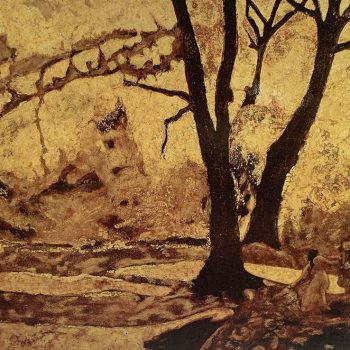
Dimensions: 60 × 90 cm
Medium: Lacquer paintings
Year: 1962
Status: Private collection
Artist: Duong Bich Lien